
Research & Precision Fabrication
Published Research Application
DF-60D CO₂ Laser Cutter Referenced in a 2026 Nature Communications Study
A real-world research application demonstrating the use of the DF-60D CO₂ laser for precision patterning of thin PET films and adhesive layers in a multilayer wearable microfluidic system.
Published fabrication method
A DF-60D in a Published Research Workflow
A study published in Nature Communications reports the DF-60D as the CO₂ laser cutter used to pattern layers of a wearable microfluidic system. The article investigates sweat-based vitamin monitoring; this application case focuses on the fabrication method documented by the researchers.
“CO₂ laser cutter (DF-60D, Xinglihua, Beijing)”
The equipment reference appears in Methods, under Fabrication of the microfluidic system. Read the published Methods ↗
On-site equipment training
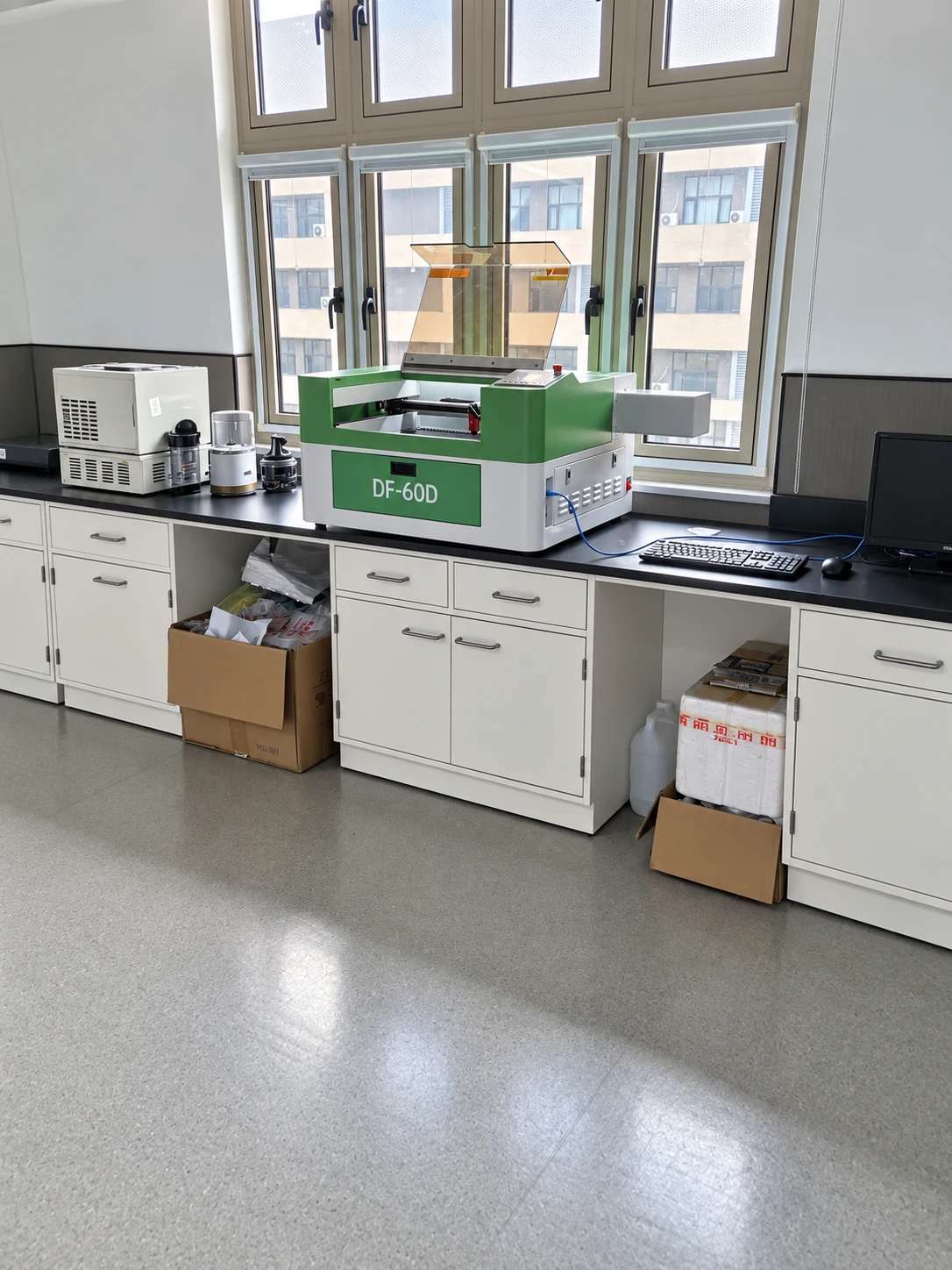
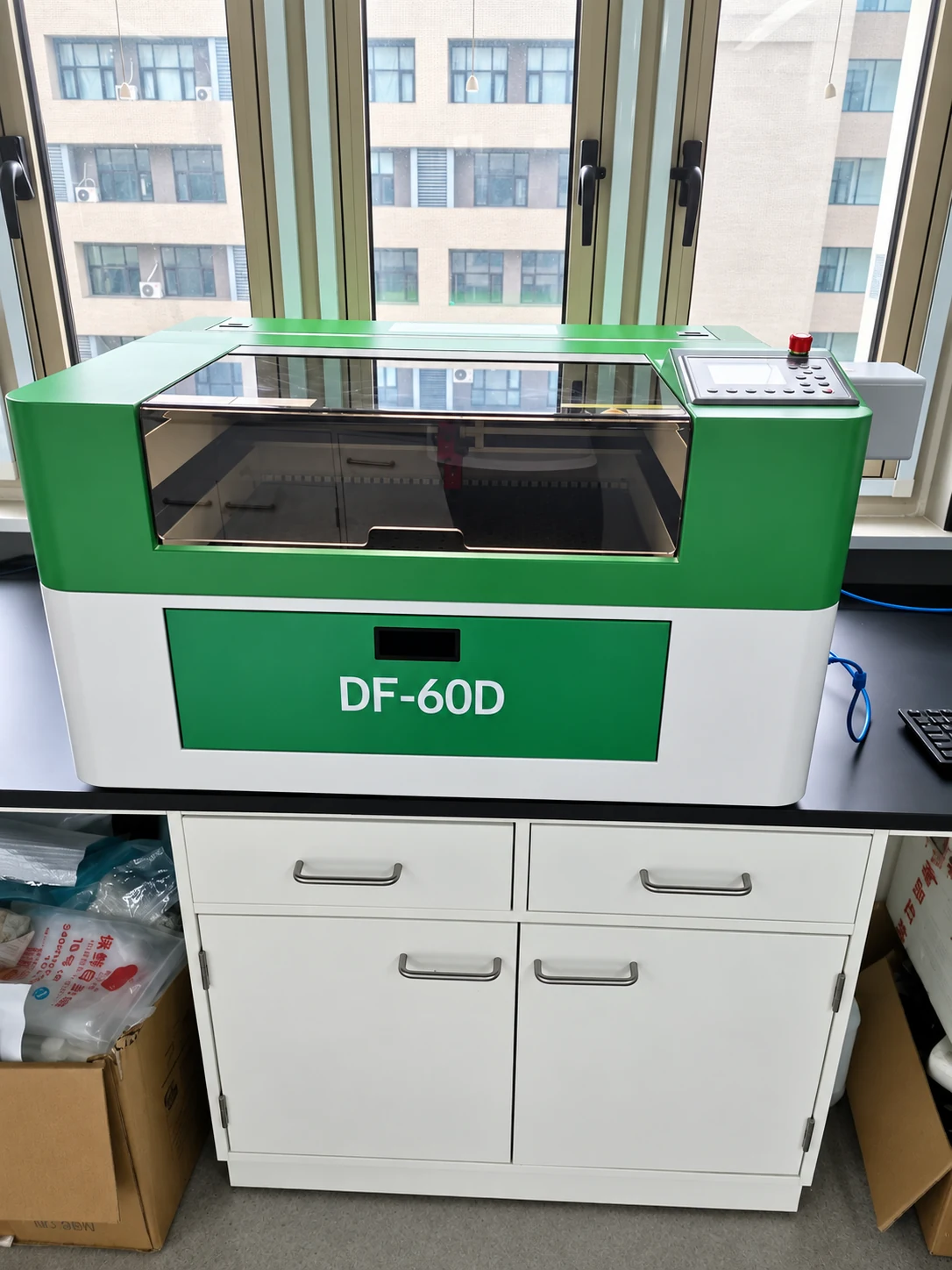
DF-60D Installed at the Food Laboratory of Zhongyuan
The photographs on this page were taken by the XLH Laser team during equipment training at the Food Laboratory of Zhongyuan. They document the DF-60D in an actual laboratory setting.
These are XLH Laser on-site photographs, not figures reproduced from the research article. The published Methods provide the source for the fabrication details discussed below.
Research-specific processing conditions
Precision Fabrication of a Multilayer Microfluidic System
The Methods describe digitally patterned PET and adhesive layers assembled into a multilayer wearable microfluidic structure. The researchers identify three materials and the corresponding laser settings:
| Reported layer / material | Power | Speed | PPI |
|---|---|---|---|
| Accumulation and reservoir layers — 3M 468MP double-sided adhesive | 60% | 80% | 1000 |
| Inlet layer — 0.025 mm PET film | 20% | 100% | 1000 |
| Channel layer — AR 93049 hydrophilic adhesive | 40% | 90% | 1000 |
Parameters from this study only. These settings describe the paper’s specific experimental conditions. They are not universal DF-60D settings or a recommended recipe for all PET or adhesive materials. Validate the actual material, thickness, geometry and machine setup for each project.
Source: original article, Methods — Fabrication of the microfluidic system ↗
Thin-film application
Thin-Film PET Processing
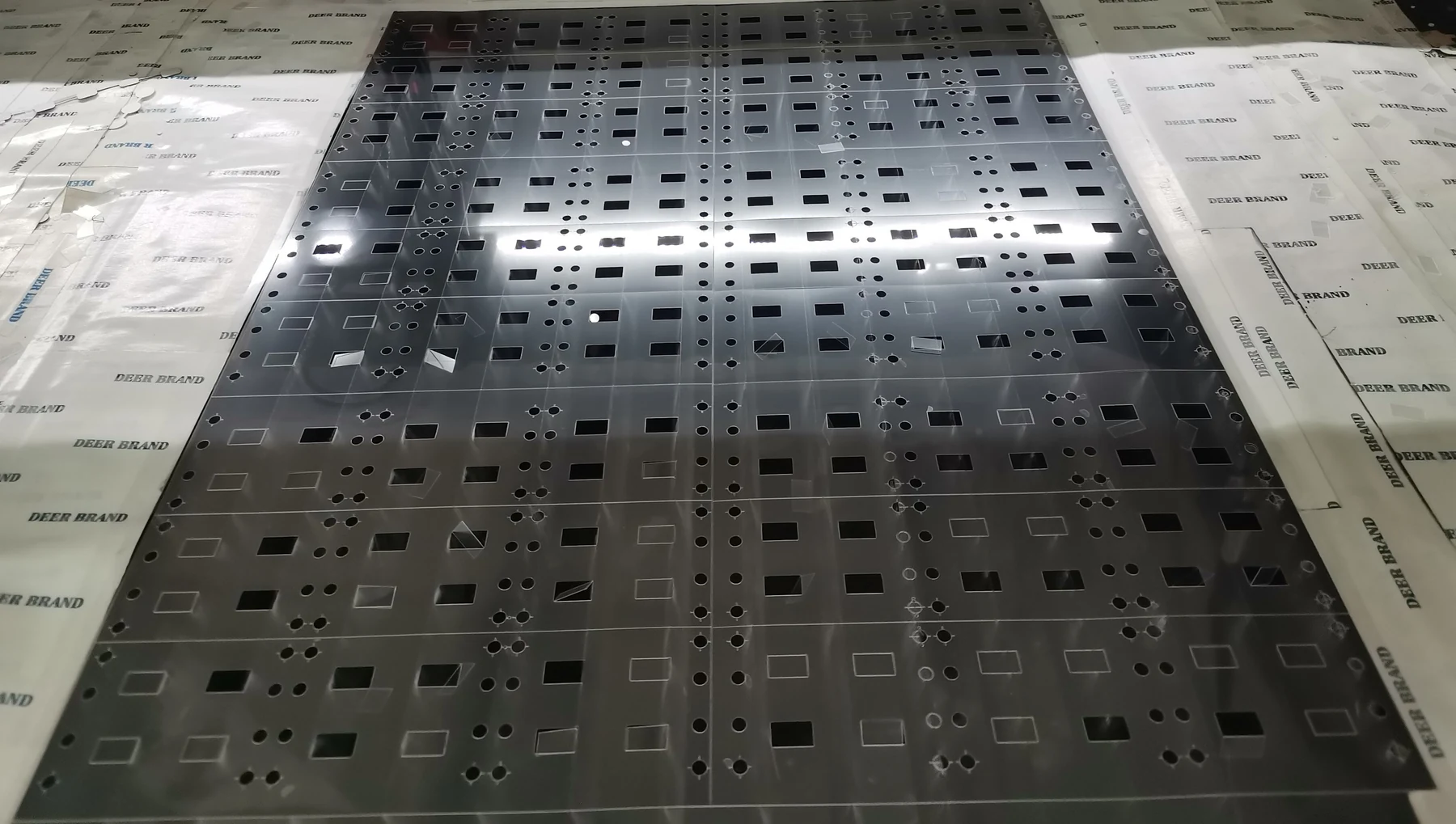
The paper specifies 0.025 mm PET film for the inlet layer. It is one documented example of using digital laser patterning to fabricate a thin-film component within a multilayer assembly.
The photograph here shows a separate XLH Laser PET processing sample. It illustrates repeated cut geometry; it is not the paper’s microfluidic device, and the photograph does not establish the sample’s thickness or dimensional tolerance.
Material identification matters
Adhesive Film Patterning
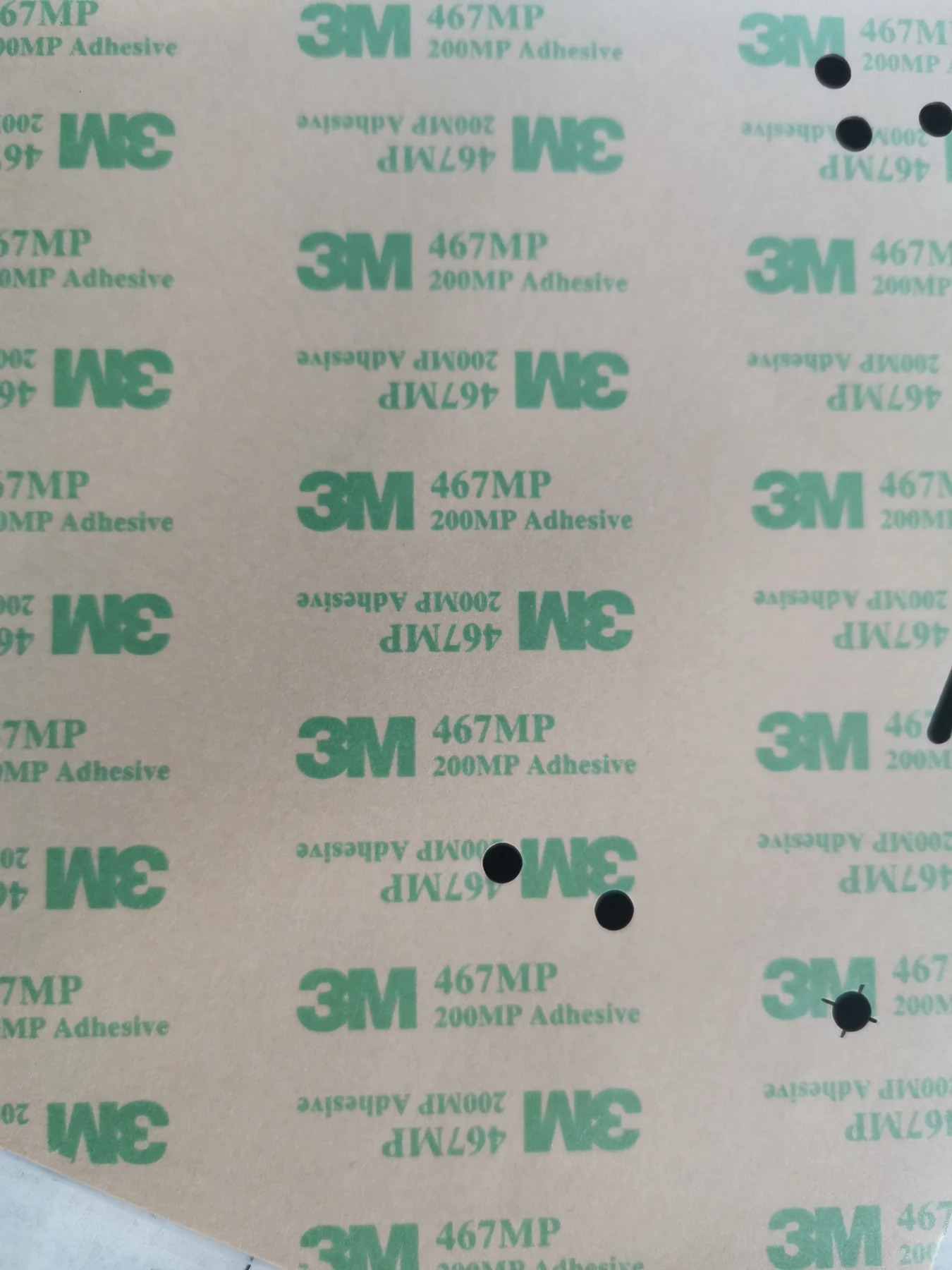
The study identifies 3M 468MP adhesive and AR 93049 hydrophilic adhesive within its multilayer fabrication method. Adhesive films require project-specific validation of cut geometry, handling and layer assembly.
The XLH Laser photograph shows 3M 467MP.
This material is shown as a separate XLH Laser processing example and should not be confused with the 3M 468MP adhesive specified in the Nature Communications study.
Beyond conventional production
From Conventional Laser Cutting to Research Fabrication
Research fabrication connects digital geometry with material selection, thin-film handling, layer alignment and prototype assembly. The published example illustrates the DF-60D’s role within a broader fabrication workflow.
The flexible-substrate sample shown here is a separate XLH Laser application example. It is not a research result or component from the cited study.
For a new project, share the substrate, thickness, feature dimensions and intended assembly method so the processing requirements can be evaluated.
Discuss a Fabrication Application →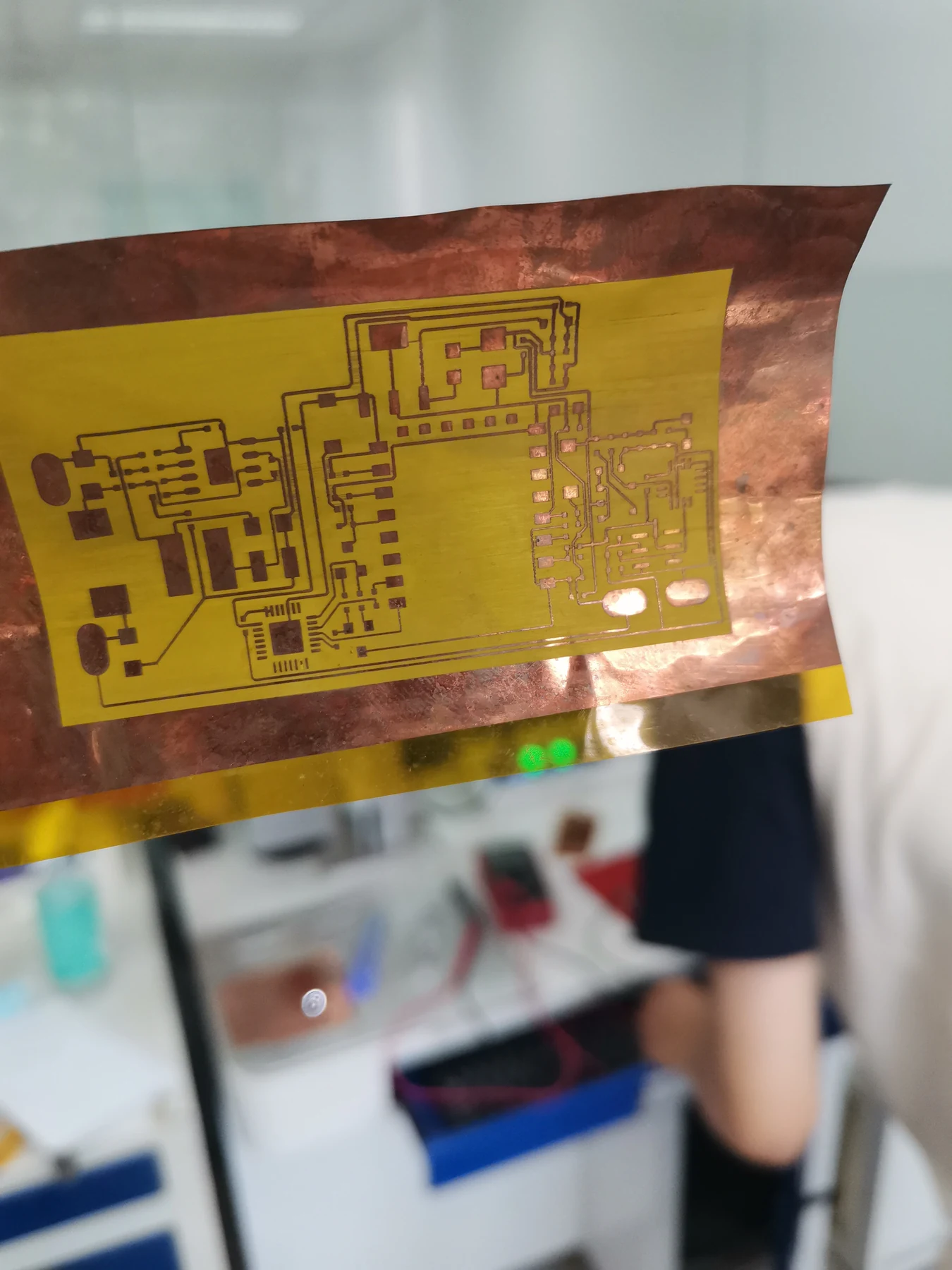
Equipment and brand identity
From Xinglihua to XLH Laser
The paper identifies the equipment as DF-60D, Xinglihua, Beijing. Xinglihua is the manufacturer of the DF-60D platform. Related laser equipment, application development and international business are now presented under the XLH Laser brand.
The published equipment name and the current XLH Laser product presentation refer to the connected equipment platform. Explore the DF60D product page →
Independent published research
About the Published Research
Real-time nanomolar vitamin monitoring in sweat using an electrochemical skin-attached device
Wang, X. et al. Nature Communications 17, 5610 (2026). Published 23 April 2026.
DOI: 10.1038/s41467-026-72356-1 ↗
Consult the original article for the complete research methods, results and supporting information. This XLH Laser page documents the equipment’s published fabrication application.
Disclaimer
XLH Laser is not affiliated with or endorsed by Nature Communications. References to the journal and research article on this page are provided solely to document the published application of the DF-60D CO₂ laser cutter.
All five photographs on this page are XLH Laser on-site or application examples. No journal logo or research figure is reproduced.